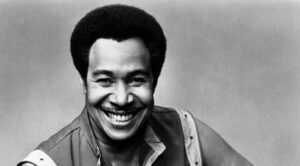

To call Lionel Richie an underrated artist twenty years ago would have brought vilification, but time has a way of bringing perspective, and time has generally been a friend to the work that Lionel Richie has released over his half century in the music business. A founding member of the Commodores, he was the heart of that group’s most memorable music, and steered the group from its funky roots to an uber-popular pop/soul sound, resulting in hit after hit from 1976-81. Songs like “Easy,” “Three Times A Lady,” “Sail On,” and a dozen other songs made the Commodores an A-List act, and Richie served as songwriter and singer of a majority of the band’s smashes.
After his 1981 smash duet with Diana Ross, the treacley “Endless Love,” Richie grew bigger than the Commodores, and an exit for a solo career was inevitable. His 1982 self-titled Motown solo debut, produced by longtime Commodores producer James Anthony Carmichael, was everything his newly found adult contemporary fans had hoped for. Beginning with the pop ballad “Truly,” it was a shimmering pop/soul disc beginning to end. And while some longtime Commodores fans simmered at the lack of funk on the disc, Richie showed himself to be a masterful writer of irresistible melodies and firmly established himself as one of the top pop singers in the world. At its best (such as on the oft-forgotten gem “You Are” and the mini-song “Just Put Some Love In Your Heart”), the disc included some of the most melodic tunes of its time.
Richie followed his debut with the even more popular Can’t Slow Down. That record yielded five top 10 hits and won a somewhat controversial 1984 Grammy Award for Best Album (beating out monster recordings by Bruce Springsteen and Prince). However, as popular as that album was (and it was scary-popular), it had the hint of contrivance, as if designed precisely for what the “target” audiences wanted to hear. Despite that tendency, it was a generally fine album and Richie’s vocal performance was excellent, as usual.
However, the formula hinted at on Can’t Slow Down became more pronounced on Richie’s next disc, Dancing On The Ceiling, a less enjoyable album that, while successful, began a minor backlash against Richie, particularly in the Soul Music community where Richie’s continued pop leanings lessened his base of support.
Unfortunately, personal and marital problems put Richie in an awkward spotlight in the late 80s and caused him to take a self-imposed hiatus for a half decade. He wasn’t heard from again until 1992’s Back To Front, a greatest hits album with a couple new cuts. It came and went very quickly. Richie didn’t record another full studio album until 1996’s poorly reviewed Louder Than Words, in which Richie appeared to be struggling for relevance in a very changed musical environment (even including a rap song). He sounded more comfortable two years later on Time, a comeback album that was more appealing to Richie’s 80s fans.
When Richie released Renaissance on Island Records in 2000, it was expected to fade quickly as a forgettable album by a former star. Instead, it was a comeback to form. Adopting a Latin dance rhythm that was being popularized by a number of pop stars at the time, Richie wrote his best material in years and found a contemporary sound that fit both him and his long time fans. And while at times his singing occasionally appeared a bit out of place with the new sounds (especially on the hit “Angel”), his writing was superb and the album hung together very well. And rather than being a bookend on a successful career, Renaissance became the first Lionel Richie album in a long time that left fans waiting for more. He met their call with Just For You, released in May, 2004. His comeback became complete two years later with the legitimate hit “Call It Love” and the album Coming Home. He followed in in 2009 with an all-out assault on Just Go, where Richie teamed with hitmakers such as Ne-Yo, Akon and Tricky Stewart to provide a very modern sound, often at the expense of Richie’s personal imprint.
As 2012 arrived, Richie released an unusual comeback album, Tuskegee, a collection of country duet covers of some of his biggest hits. It became one of the biggest releases of the year, hitting #1 and selling over a million copies. It also became an unexpected vehicle that brought Richie back to the top of the charts. That career renaissance continues to this day, as the always affable Richie continues to sell out tours around the world and is a television regular through his role on the rebooted American Idol.
Over the course of Lionel Richie’s solo career, the mixed feelings that various fans and critics have expressed have resulted in large part from Richie’s consistent eagerness to please large numbers of fans with his music, even to the dismay of Soul and Funk purists. Whether this tendency on his part is a strength or a weakness is a matter of opinion, but time has had a way of moving us past that issue. Instead, the perspective brought by years now spotlights the masterful songwriting and vocal skills that Richie consistently brought to his early work — particularly the memorable ballads he has created both as a Commodore and on his own.
by Chris Rizik