
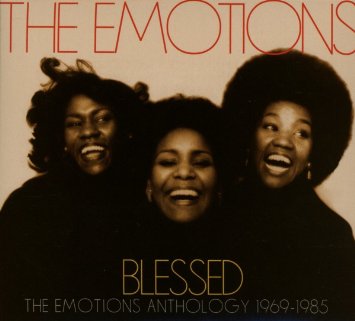
From the beginning, the popular female soul group The Emotions was a family affair. Beginning at their early childhood, sisters Jeanette, Wanda and Sheila Hutchinson were singing publicly with their dad Joe Hutchinson, performing Gospel shows around their native Chicago as The Hutchinson Sunbeams. Their regional popularity garnered the attention of Pervis Staples of the famed Staples Singers and in 1969 they were signed by the R&B powerhouse label Stax Records.
At Stax, the group was teamed with famed producers Isaac Hayes and David Porter and scored a number of soul hits, including “Show Me How” and “So I Can Love You.” Impressively, the young sisters penned many of their most popular songs of this era. However, by the time of the group’s third release, Stax was broke, and the Emotions went looking for a new record contract.
The sisters found a new home with Columbia, thanks to Earth Wind & Fire’s Maurice White, who was signed the trio to his production company and took the helm for the second leg of their career. At this time, Jeanette took a year off to have a baby and was replaced by younger sister Pamela (who went back to school a year later but continued to work both on record and in concerts as the “fourth Emotion”).
The association with White hit pay dirt immediately, and the group’s 1976 Columbia debut single and album “Flowers” were R&B smashes. However it was 1977’s Rejoice that brought the Emotions to the top of the pop and soul charts. That album’s first single, “Best of My Love,” was one of the year’s greatest cuts (and a Grammy winner), with the Hutchinson sisters’ tight harmonies working perfectly with White’s joyous production and Wanda’s powerful lead vocals. The follow-up single was equally strong. A beautiful ballad, “Don’t Ask My Neighbors,” on which Sheila Hutchinson gave an emotionally resonant performance, took the group back up the charts and became one of the most covered tunes of the next 20 years.
The Emotions scored again the following year with the single “Smile” and the hit album Sunbeam. Then in 1979 they topped the pop, soul and disco charts with “Boogie Wonderland,” an infectious dance duet with Earth Wind & Fire that became one of that year’s biggest hits, sounding surprisingly bright despite its rather dark lyrics. Unfortunately, the success of “Boogie Wonderland” was a mixed blessing, as it led to a legal dispute with White – the song was included on EWF’s I Am album but was excluded from the Emotions’ release, a slight that the sisters felt was unfair and detrimental to their careers.
By The Emotions’ next album, Come Into My World, the train began to slow down, as the album failed to meet the chart heights of its predecessors. A full break with White and his production company was completed by the mid-80s, and the sisters made the difficult decision to replace their father as their manager.
They moved to Red Label Records and then Motown, scoring modest hits with “You’re the One” and “Miss Your Love,” before briefly retiring. They regrouped in the early 90s to perform a music version of their careers entitled Bigger than Bubblegum and releasing a live album in 1997.
Wanda, Pamela and Sheila Hutchinson carried The Emotions into the 21st century, continuing to tour while making occasional returns to the studio, including guest appearances on Earth, Wind & Fire’s 2003 album The Promise and Terrace Martin’s Grammy-nominated 2016 project Velvet Portraits. Sheila retired from performing by around 2010, while Jeanette Hutchinson released a solo album, No Regrets, in 2016. Sadly, Pamela died in September 2020 after a lengthy illness. In the years since, Wanda has continued to perform with her daughters, extending the musical legacy she began with her sisters more than half a century earlier.
By Chris Rizik


